 EN
EN


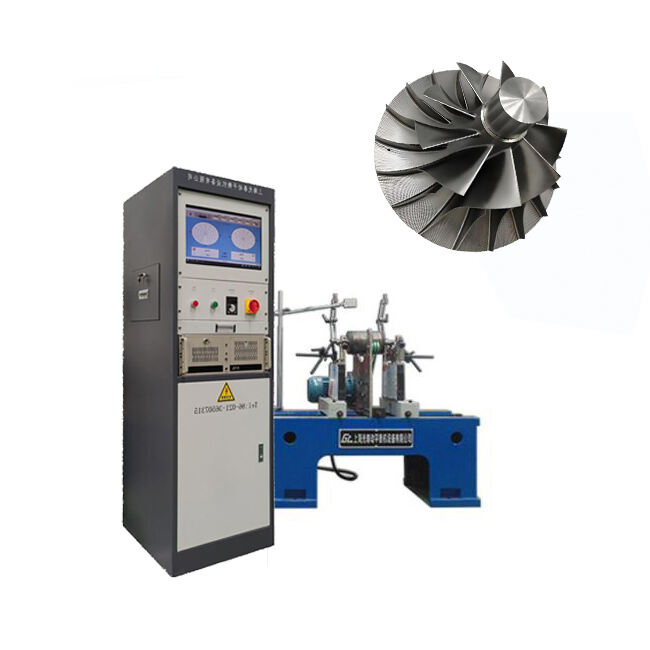
Modern automotive and industrial applications increasingly rely on precision-engineered turbochargers to maximize engine performance and efficiency. The critical component ensuring these high-speed rotating assemblies operate smoothly lies in the quality and precision of turbochargerturbine balancing machines used during manufacturing and maintenance processes. These specialized machines have become indispensable tools for automotive manufacturers, repair facilities, and engineering workshops worldwide.
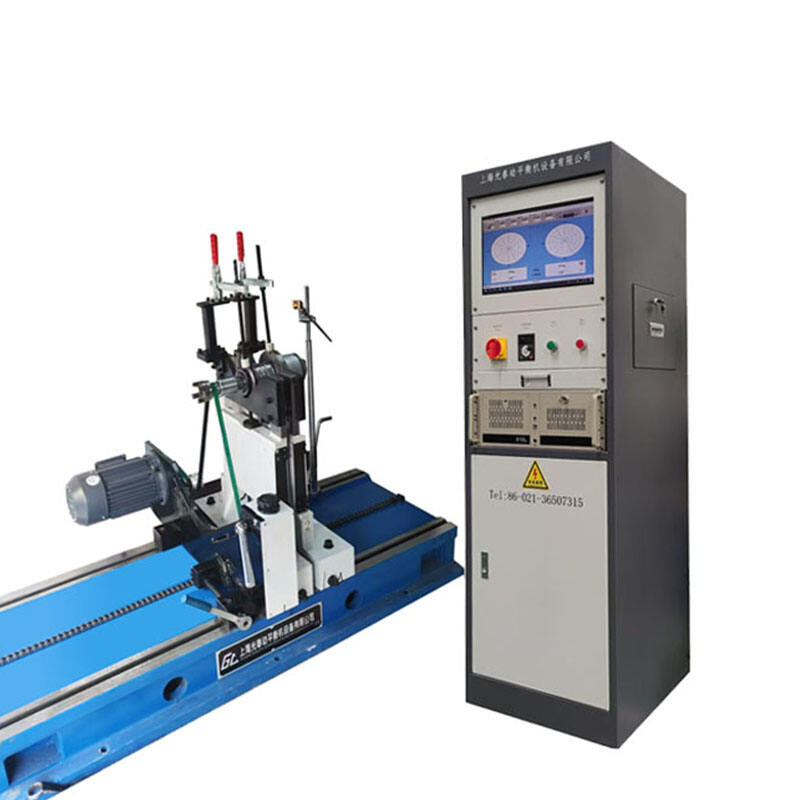
The selection of appropriate balancing equipment directly impacts the longevity, performance, and reliability of turbocharger systems. Professional-grade turbochargerturbine balancing machines incorporate advanced measurement technologies, precision spindles, and sophisticated software algorithms to detect and correct even the smallest imbalances. This level of precision becomes increasingly crucial as turbocharger operating speeds continue to rise, with modern units frequently exceeding 200,000 RPM during normal operation.
Understanding Turbocharger Balancing Fundamentals
Dynamic Balancing Principles
Dynamic balancing represents the cornerstone of turbocharger performance optimization. Unlike static balancing, which only addresses weight distribution in a single plane, dynamic balancing corrects imbalances across multiple planes simultaneously. Professional turbochargerturbine balancing machines utilize advanced sensor arrays and computational algorithms to measure vibrations, phase relationships, and amplitude variations during rotation cycles.
The physics underlying dynamic balancing involves complex mathematical calculations that account for centrifugal forces, rotational inertia, and harmonic frequencies. Modern balancing systems process thousands of data points per second, creating detailed vibration signatures that reveal even microscopic imbalances. This precision becomes essential when dealing with turbocharger components that must maintain perfect balance while operating at extreme temperatures and rotational speeds.
Precision Measurement Technologies
Contemporary turbochargerturbine balancing machines incorporate multiple measurement technologies to achieve unprecedented accuracy levels. Laser displacement sensors, accelerometers, and optical encoders work in concert to capture comprehensive balancing data. These instruments can detect imbalances as small as 0.1 grams at specific radial distances, ensuring turbochargers meet stringent OEM specifications.
Advanced signal processing capabilities allow these machines to filter background noise, compensate for external vibrations, and isolate specific frequency components related to imbalance conditions. Digital filtering algorithms eliminate interference from building vibrations, electrical noise, and other environmental factors that could compromise measurement accuracy. This technological sophistication enables operators to achieve balancing tolerances that were impossible with previous generation equipment.
Key Features of Professional Balancing Equipment
Motorized Spindle Systems
High-precision motorized spindles form the foundation of superior turbochargerturbine balancing machines. These specialized drive systems must accommodate various turbocharger sizes while maintaining exceptional rotational accuracy. Premium spindle assemblies feature precision ball bearings, advanced lubrication systems, and thermal compensation mechanisms to ensure consistent performance across extended operating periods.
Variable speed control capabilities allow operators to test turbochargers at multiple rotational frequencies, revealing resonance conditions and harmonic imbalances that might not appear at single test speeds. Sophisticated spindle control systems can gradually accelerate test components through their entire operating range while continuously monitoring balance conditions and identifying critical speed zones where vibration amplification occurs.
Software Integration and Analysis
Modern turbochargerturbine balancing machines rely heavily on sophisticated software platforms that transform raw measurement data into actionable balancing instructions. These programs calculate precise correction weights, determine optimal correction plane locations, and generate detailed reports documenting balancing procedures and results. User-friendly interfaces guide operators through complex balancing sequences while maintaining detailed audit trails for quality assurance purposes.
Advanced software packages include extensive databases containing balancing specifications for numerous turbocharger models, automated correction calculations, and statistical analysis tools for process optimization. Integration with manufacturing execution systems allows seamless data transfer between balancing stations and quality control databases, enabling comprehensive traceability throughout production processes.
Applications Across Industries
Automotive Manufacturing
Automotive manufacturers represent the largest market segment for turbochargerturbine balancing machines, where production volumes demand high-speed, automated balancing processes. Assembly line integration requires equipment capable of processing hundreds of turbochargers daily while maintaining consistent quality standards. Automated loading systems, robotic part handling, and integrated quality control systems enable seamless integration within high-volume manufacturing environments.
Quality requirements in automotive applications necessitate statistical process control capabilities, real-time data logging, and immediate feedback systems to identify potential production issues before they impact product quality. Modern balancing stations can automatically adjust machining parameters, trigger alerts for out-of-specification conditions, and generate comprehensive production reports for continuous improvement initiatives.
Aftermarket Service and Repair
Independent turbocharger rebuild facilities and automotive service centers require versatile turbochargerturbine balancing machines capable of handling diverse turbocharger types and configurations. These applications often involve restoration of worn or damaged components, requiring more extensive correction capabilities than new part production. Service-oriented balancing equipment must accommodate various mounting configurations, provide flexible correction options, and offer detailed diagnostic capabilities to identify root causes of imbalance conditions.
Portable and semi-portable balancing solutions have gained popularity in service applications where equipment must be transported between facilities or used in field service situations. These compact systems maintain professional-grade accuracy while offering enhanced mobility and reduced facility requirements, making advanced balancing technology accessible to smaller service operations.
Selection Criteria and Considerations
Capacity and Size Requirements
Selecting appropriate turbochargerturbine balancing machines requires careful evaluation of component size ranges, weight capacities, and operational requirements. Machines designed for passenger car turbochargers may lack the capacity for heavy-duty commercial vehicle applications, while oversized equipment could compromise accuracy when processing smaller components. Optimal selection involves matching machine capabilities to specific application requirements while considering future expansion possibilities.
Weight capacity considerations extend beyond simple component mass to include fixture weights, tooling requirements, and safety margins for various turbocharger configurations. Modern balancing machines typically offer capacity ranges from 5kg to 500kg, with specialized units available for extreme applications requiring greater capacity or enhanced precision levels.
Accuracy and Precision Specifications
Balancing accuracy requirements vary significantly across different applications, with automotive OEM specifications typically demanding residual imbalance levels below 0.5 gram-millimeters per kilogram. Professional turbochargerturbine balancing machines must demonstrate capability to achieve and maintain these tolerance levels consistently across thousands of operating cycles. Calibration procedures, measurement repeatability, and long-term stability become critical factors in equipment selection processes.
Environmental factors including temperature variations, facility vibrations, and electrical interference can significantly impact balancing accuracy. Premium equipment incorporates compensation mechanisms, isolation systems, and environmental monitoring capabilities to maintain specified accuracy levels under varying operating conditions. Understanding these factors proves essential for achieving optimal balancing results in real-world production environments.
Technology Trends and Future Developments
Automation and Industry 4.0 Integration
Contemporary turbochargerturbine balancing machines increasingly incorporate Industry 4.0 concepts including Internet of Things connectivity, predictive maintenance capabilities, and artificial intelligence optimization. These advanced systems can automatically adjust balancing parameters, predict component failure modes, and optimize correction strategies based on historical data analysis. Smart sensors throughout the machine continuously monitor critical parameters and alert operators to potential issues before they impact production quality.
Machine learning algorithms analyze vast datasets from balancing operations to identify patterns, optimize correction strategies, and improve overall process efficiency. These systems can automatically recognize different turbocharger types, select appropriate balancing programs, and adapt correction techniques based on component characteristics and historical performance data.
Enhanced Measurement Capabilities
Emerging sensor technologies and measurement techniques continue expanding the capabilities of turbochargerturbine balancing machines. Advanced vibration analysis, thermal imaging integration, and acoustic monitoring provide comprehensive component evaluation beyond traditional balancing measurements. These enhanced diagnostic capabilities enable identification of bearing problems, aerodynamic issues, and manufacturing defects that could affect turbocharger performance and longevity.
Next-generation balancing systems will likely incorporate virtual reality interfaces, augmented reality guidance systems, and advanced visualization tools to improve operator efficiency and reduce training requirements. These technological advances promise to make sophisticated balancing technology more accessible while maintaining the precision and reliability demanded by modern turbocharger applications.
FAQ
What factors determine the required accuracy level for turbochargerturbine balancing machines
The required accuracy level depends primarily on the turbocharger's operating speed, application requirements, and OEM specifications. High-performance automotive turbochargers operating above 150,000 RPM typically require residual imbalance levels below 0.3 gram-millimeters per kilogram, while industrial applications may accept slightly higher tolerances. Consider the end-use application, customer specifications, and regulatory requirements when determining accuracy needs.
How do I choose between different turbochargerturbine balancing machines for my facility
Selection should be based on component size range, production volume requirements, accuracy specifications, and available floor space. Evaluate the maximum turbocharger weight and dimensions your facility processes, determine required throughput rates, and assess integration needs with existing production systems. Consider future expansion plans and ensure selected equipment can accommodate growing capacity requirements.
What maintenance requirements are typical for professional balancing equipment
Regular maintenance includes daily cleaning and inspection, weekly lubrication of moving parts, monthly calibration verification, and annual comprehensive service by qualified technicians. Spindle bearings typically require replacement every 2-3 years depending on usage intensity, while sensors and measurement systems need periodic calibration to maintain accuracy. Establish a preventive maintenance schedule based on manufacturer recommendations and actual usage patterns.
Can existing turbochargerturbine balancing machines be upgraded with new technology
Many existing machines can be upgraded with improved software, enhanced sensors, and modernized control systems. However, structural limitations may restrict the extent of possible upgrades, particularly for older equipment lacking sufficient computing power or mechanical precision. Consult with equipment manufacturers or specialized service providers to evaluate upgrade feasibility and cost-effectiveness compared to new equipment acquisition.
Table of Contents
- Understanding Turbocharger Balancing Fundamentals
- Key Features of Professional Balancing Equipment
- Applications Across Industries
- Selection Criteria and Considerations
- Technology Trends and Future Developments
-
FAQ
- What factors determine the required accuracy level for turbochargerturbine balancing machines
- How do I choose between different turbochargerturbine balancing machines for my facility
- What maintenance requirements are typical for professional balancing equipment
- Can existing turbochargerturbine balancing machines be upgraded with new technology

