 EN
EN


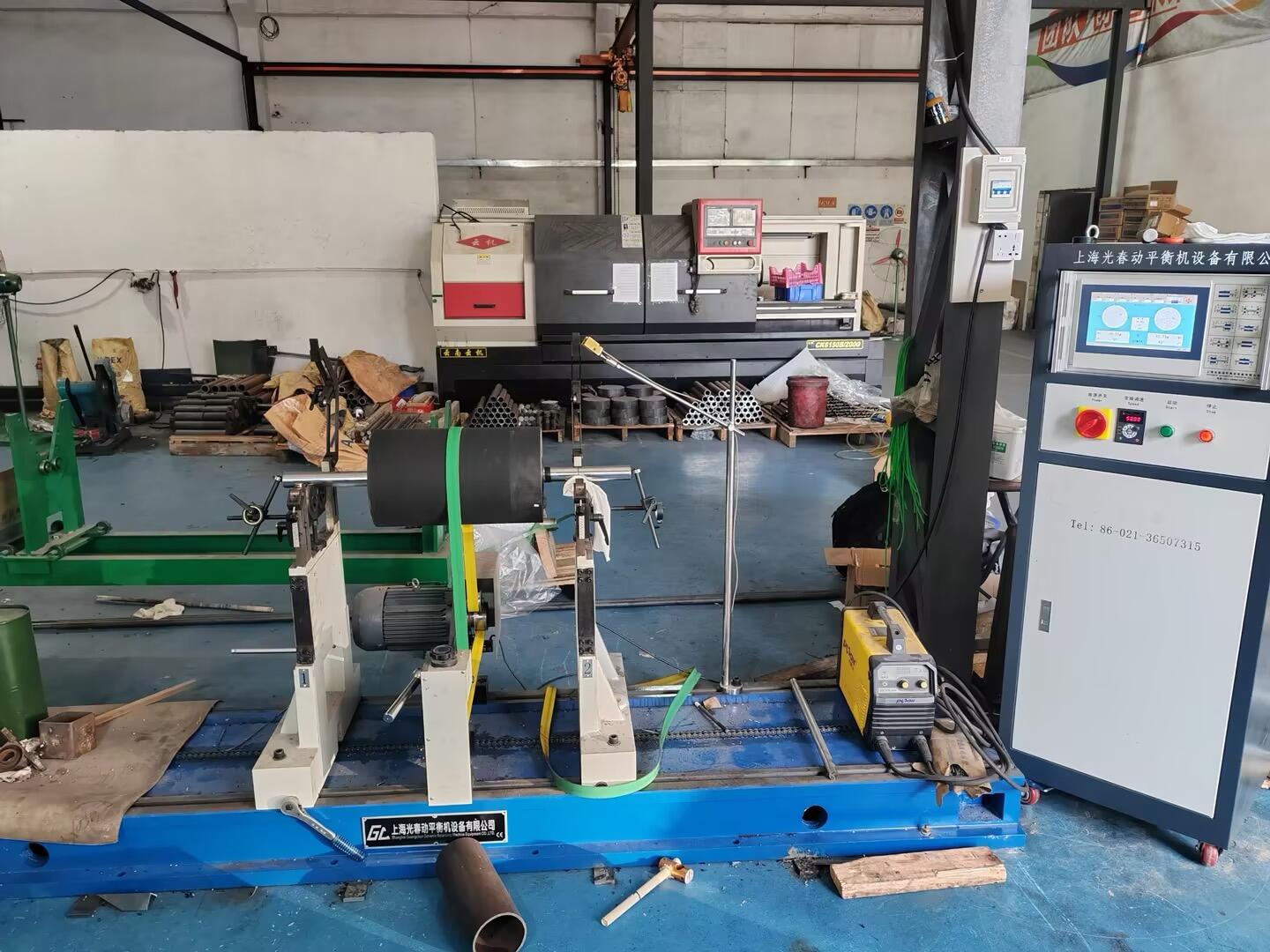
Industrial rotating equipment forms the backbone of manufacturing operations across countless industries, from automotive production lines to power generation facilities. When these critical components develop imbalances due to wear, manufacturing tolerances, or operational stress, they can experience accelerated deterioration that leads to costly downtime and premature failure. The strategic implementation of precision balancing technology represents one of the most effective preventive maintenance approaches available to modern industrial operations.
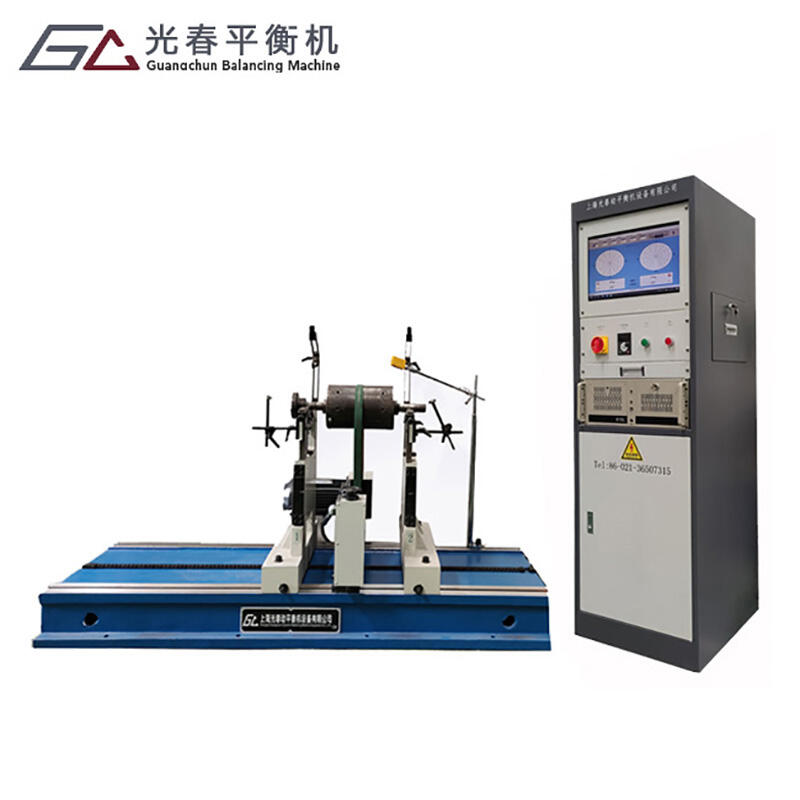
A general balancing machine serves as a specialized diagnostic and corrective tool that identifies and eliminates mass imbalances in rotating components before they cause significant mechanical damage. By addressing these imbalances systematically, facilities can extend equipment lifespan dramatically while reducing maintenance costs, improving operational efficiency, and preventing catastrophic failures that could result in production shutdowns or safety incidents.
Understanding the Relationship Between Imbalance and Equipment Deterioration
Mechanical Stress Amplification in Unbalanced Systems
When rotating equipment operates with mass imbalances, even minor discrepancies create centrifugal forces that increase exponentially with rotational speed. These forces manifest as excessive vibrations that propagate throughout the mechanical system, causing stress concentrations in bearings, shafts, couplings, and supporting structures. A general balancing machine helps quantify these imbalances precisely, enabling maintenance teams to understand the severity of correction needed before equipment degradation accelerates beyond economical repair thresholds.
The relationship between imbalance magnitude and mechanical stress follows predictable engineering principles that make early intervention highly cost-effective. Research indicates that correcting imbalances detected through systematic balancing machine analysis can reduce bearing stress by up to seventy percent, significantly extending component life while improving overall system reliability and performance consistency.
Vibration-Induced Wear Patterns and Failure Modes
Excessive vibrations caused by imbalanced rotating components create specific wear patterns that accelerate equipment deterioration through multiple failure mechanisms. Bearing races experience uneven loading that leads to premature fatigue failure, while shaft deflections cause misalignment conditions that compound stress throughout the drive train. A general balancing machine enables maintenance professionals to identify and correct these conditions before they progress to critical failure stages.
Dynamic imbalances generate complex vibration signatures that can damage precision-machined surfaces, loosen fasteners, crack welds, and create resonance conditions that amplify destructive forces. By utilizing systematic balancing procedures, facilities can eliminate these vibration sources and restore equipment to optimal operating conditions that support extended service life and reliable performance under demanding industrial operating conditions.
Quantifiable Lifespan Extension Through Precision Balancing
Bearing Life Optimization Through Reduced Dynamic Loading
Rolling element bearings represent critical components whose service life directly correlates with dynamic loading conditions imposed by rotating equipment operation. Imbalanced rotors create cyclic loading that reduces bearing life according to well-established engineering calculations based on load magnitude and frequency. Implementation of general balancing machine procedures can extend bearing life by factors of three to five through systematic reduction of harmful dynamic forces.
Proper balancing eliminates the alternating stress cycles that cause bearing fatigue failure, allowing components to operate within design load parameters that maximize service life. Field studies demonstrate that equipment balanced to precision standards experiences bearing failure rates reduced by up to eighty percent compared to unbalanced equipment operating under similar conditions, representing substantial cost savings through reduced maintenance requirements and extended replacement intervals.
Shaft and Coupling Longevity Through Stress Reduction
Rotating shafts subjected to imbalance forces experience bending stresses that create fatigue conditions leading to crack initiation and propagation over operational cycles. These stress concentrations typically occur at geometric discontinuities such as keyways, shoulders, and coupling interfaces where material properties and loading conditions combine to create failure-prone conditions. A general balancing machine helps identify and correct imbalances before they generate shaft stresses that exceed material fatigue limits.
Flexible couplings designed to accommodate minor misalignments can experience premature wear when subjected to excessive dynamic forces generated by imbalanced equipment. Systematic balancing reduces coupling loading to design parameters, extending service life while maintaining power transmission efficiency and reducing maintenance requirements throughout the operational lifecycle.
Operational Efficiency Improvements and Cost Reduction
Energy Consumption Optimization
Balanced rotating equipment operates with reduced friction and eliminates energy losses associated with excessive vibrations and dynamic loading conditions. Motors driving balanced loads consume less power while delivering consistent torque output, resulting in measurable energy cost savings over extended operational periods. A general balancing machine enables facilities to achieve these efficiency improvements through systematic correction of mass distribution irregularities.
Power consumption reductions of five to fifteen percent are commonly achieved when imbalanced equipment is corrected to precision standards using professional balancing procedures. These energy savings compound over years of operation while simultaneously reducing thermal stresses on electrical components and improving power factor characteristics that can provide additional utility cost benefits in commercial and industrial rate structures.
Maintenance Cost Reduction Through Preventive Intervention
Proactive balancing programs using general balancing machine technology represent highly cost-effective preventive maintenance strategies that eliminate expensive corrective repairs and emergency shutdowns. The cost of balancing services typically represents a small fraction of equipment replacement or major overhaul expenses, making systematic balancing programs attractive from both operational and financial perspectives.
Facilities implementing comprehensive balancing programs report maintenance cost reductions averaging thirty to fifty percent through elimination of vibration-related failures, extended component life, and reduced frequency of major repairs. These cost savings accumulate over equipment lifecycles while improving operational reliability and reducing unplanned downtime that can disrupt production schedules and impact customer delivery commitments.
Implementation Strategies for Maximum Lifespan Benefits
Balancing Frequency and Timing Considerations
Optimal implementation of general balancing machine procedures requires careful consideration of equipment operating cycles, maintenance schedules, and performance indicators that signal the need for corrective action. New equipment should undergo initial balancing verification to ensure manufacturing tolerances meet operational requirements, while existing equipment benefits from periodic balancing assessment based on vibration monitoring data and performance trends.
Equipment operating in demanding environments or applications with frequent load changes may require more frequent balancing intervals compared to equipment operating under stable conditions. Establishing balancing frequencies based on equipment criticality, operating conditions, and historical performance data ensures maximum benefit while optimizing maintenance resource allocation and minimizing operational disruption.
Integration with Condition Monitoring Programs
Modern industrial facilities achieve maximum equipment lifespan benefits by integrating general balancing machine procedures with comprehensive condition monitoring programs that track vibration signatures, temperature trends, and performance parameters over time. This integrated approach enables maintenance teams to identify developing imbalance conditions before they cause significant equipment degradation while optimizing balancing intervention timing for maximum cost effectiveness.
Vibration analysis data collected during routine monitoring provides valuable input for balancing machine operators, enabling more accurate correction procedures and better prediction of future balancing requirements. This systematic approach maximizes equipment lifespan while minimizing maintenance costs and operational disruption through optimized scheduling and resource utilization strategies.
FAQ
How often should industrial rotating equipment be balanced using a general balancing machine?
Balancing frequency depends on equipment criticality, operating conditions, and vibration monitoring data. Critical equipment in demanding environments may require balancing every six to twelve months, while equipment in stable conditions might need balancing only every two to three years. Condition monitoring systems help determine optimal balancing intervals based on actual performance trends rather than arbitrary time schedules.
What types of rotating equipment benefit most from general balancing machine services?
Motors, pumps, fans, compressors, turbines, generators, and any rotating machinery with speeds above 600 RPM typically benefit significantly from precision balancing. Equipment with large rotors, high operating speeds, or critical applications show the greatest lifespan improvements and cost savings when balanced to precision standards using professional balancing machine procedures.
Can balancing procedures restore equipment that already shows signs of imbalance damage?
Balancing can prevent further deterioration and often improves performance of equipment showing early imbalance symptoms, but severely damaged components may require repair or replacement before balancing becomes effective. Early intervention using general balancing machine analysis provides the best results, while advanced damage may need correction before balancing procedures can restore optimal equipment performance and longevity.
What precision standards should be targeted when using a general balancing machine for lifespan optimization?
Industry standards such as ISO 1940 and API 610 provide balancing grade recommendations based on equipment type and operating conditions. Most industrial rotating equipment benefits from Grade 2.5 or better balancing quality, while precision applications may require Grade 1.0 or higher. Professional balancing machine operators can recommend appropriate precision targets based on specific equipment requirements and operational objectives.
Table of Contents
- Understanding the Relationship Between Imbalance and Equipment Deterioration
- Quantifiable Lifespan Extension Through Precision Balancing
- Operational Efficiency Improvements and Cost Reduction
- Implementation Strategies for Maximum Lifespan Benefits
-
FAQ
- How often should industrial rotating equipment be balanced using a general balancing machine?
- What types of rotating equipment benefit most from general balancing machine services?
- Can balancing procedures restore equipment that already shows signs of imbalance damage?
- What precision standards should be targeted when using a general balancing machine for lifespan optimization?

